

Description
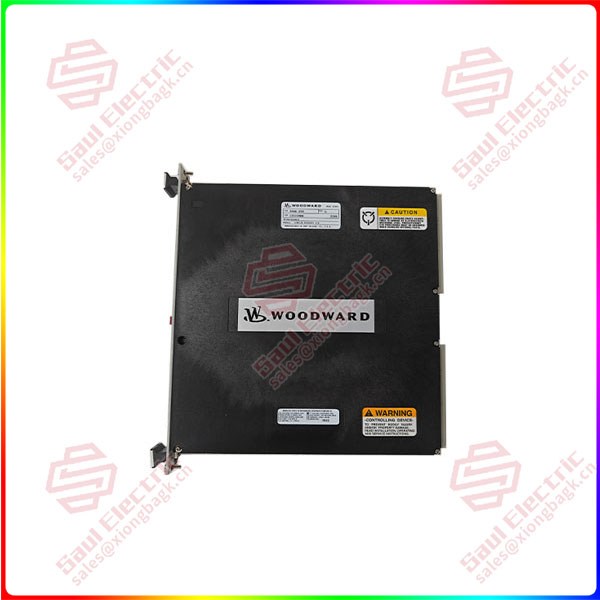
WOODWARD 5437-524 — Digital Servo / Actuator Driver
Product: 5437-524, Digital Servo Drive Module
Manufacturer: Woodward, Inc.
Primary Application: A digital servo amplifier/position controller designed to interface with and drive electro-hydraulic servo actuators or electro-mechanical actuators for precise fuel, steam, or air flow control in gas turbines, steam turbines, and large diesel engines.
1. Core Overview & Positioning
The Woodward 5437-524 is a specialized servo drive module within Woodward’s extensive 5437 series. It acts as the intelligent power and control interface between a primary digital governor (such as a Woodward 723PLUS, 2301A, or NetCon controller) and a final control element like a fuel valve or inlet guide vane actuator.
Key Function: It executes a high-speed, closed-loop position control algorithm. It receives a position command from the main controller, compares it to real-time feedback from an actuator-mounted position sensor (LVDT/RVDT), and dynamically adjusts its high-power output to drive the actuator to the exact commanded position with precision and stability.
2. Key Features & Functions
-
Precision Closed-Loop Control: Forms the inner loop of a cascade control system, ensuring actuator position accurately tracks the setpoint from the speed/load governor.
-
Dual Input Processing:
-
Command Input: Accepts a low-level analog position command signal (typically ±10V DC or 4-20mA) from the primary controller.
-
Feedback Input: Accepts AC signals from a Linear Variable Differential Transformer (LVDT) or Rotary Variable Differential Transformer (RVDT) attached to the actuator to measure actual position.
-
-
High-Power Output Drive: Supplies the modulated current (typically in the range of ±80mA to ±300mA) required to drive the inductive coil of a servo valve or the amplifier for an electric actuator.
-
Advanced Diagnostics & Protection:
-
Continuous monitoring of LVDT/RVDT signal health (detects opens, shorts, loss of excitation).
-
Monitors servo coil current and driver stage health.
-
Detects excessive position error and can trigger a fault shutdown to a safe state.
-
-
Field-Configurable Tuning: Allows adjustment of critical servo loop parameters (Proportional, Integral, and Derivative gains, deadband compensation, current limits) via configuration software to optimize performance for the specific actuator dynamics.
-
Status Communication: Reports operational status, faults, and diagnostic data to the primary controller via a communication link (e.g., Woodward’s Gov. Bus/NetBus).
3. Common Technical Specifications
-
Part Number Context: The
-524suffix indicates a specific variant within the 5437 family, defining its exact input/output ranges, connector types, and firmware features. -
Command Signal: Analog, typically ±10V DC or 4-20mA.
-
Feedback Signal: AC LVDT/RVDT, commonly with a 2.5 – 5.0 Vrms, 2.5 – 10 kHz excitation signal.
-
Output Drive: Current output suitable for standard industrial servo valve coils.
-
Power Supply: Requires clean, regulated DC power, typically ±15V DC for control circuitry and +24V DC or similar for the power output stage.
-
Communication Interface: Typically includes a proprietary Woodward serial interface (e.g., for connection to a 723PLUS controller) for configuration and diagnostics.
-
Physical Form: A printed circuit board (PCB) module designed for installation within a Woodward control cabinet or a dedicated drive enclosure.
4. System Integration & Configuration
-
Role in the Control Chain: It is the final control element driver in a hierarchical system:
-
Primary Controller: Computes the required fuel/air setpoint based on speed, load, or process demands.
-
Servo Driver (5437-524): Translates this setpoint into precise physical actuator movement.
-
Actuator & LVDT: The mechanical assembly that moves the valve/rack and provides position feedback.
-
-
Configuration Tool: Set up, calibrated, and tuned using Woodward Toolkit software. The configuration process involves:
-
Setting input/output signal types and scaling.
-
Performing LVDT calibration (span and zero adjustment).
-
Tuning the PID gains of the position loop for optimal response (fast without oscillation).
-
-
Critical Calibration: A precise mechanical calibration (linking the LVDT stroke to the actual valve stroke) is essential for accurate control.
5. Typical Applications
This module is fundamental in applications requiring precise and fast actuation for prime mover control:
-
Gas Turbine Control: Driving fuel metering valves, gas control valves (GCVs), inlet guide vanes (IGVs), and compressor bleed valves.
-
Steam Turbine Control: Positioning governor valves for speed/load control.
-
Diesel & Heavy Fuel Oil Engine Control: Controlling fuel rack actuators or electronic unit pump/injector actuators.
-
Compressor Control: Anti-surge valve actuation in centrifugal compressor systems.
Reviews
There are no reviews yet.