

Description
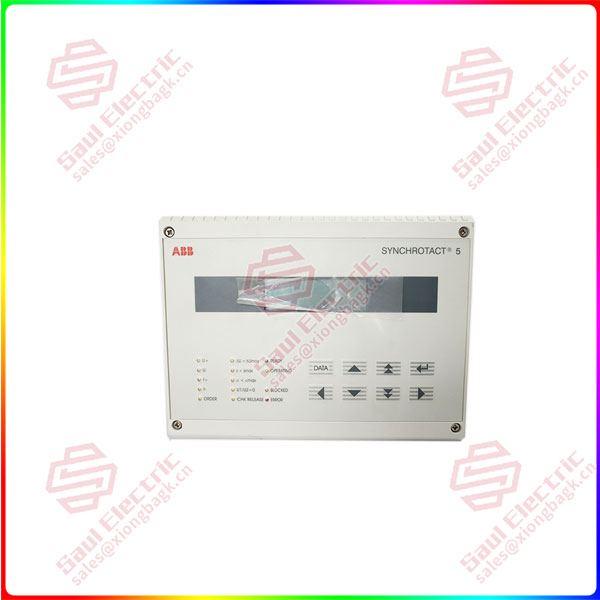
ABB SYNCHROTACT 6 SYN6302 — Automatic Synchronizing Relay
Product: SYN6302 — Automatic Synchronizing Relay
Series: SYNCHROTACT 6
Manufacturer: ABB
Primary Application: An advanced automatic synchronizing relay designed for the safe and precise synchronization of generators to a busbar or busbar to busbar in power generation plants, industrial facilities, and marine electrical systems.
1. Core Overview & Positioning
The ABB SYN6302 is a key member of the SYNCHROTACT 6 family of synchronizing and protection relays. It automates the entire synchronization process, ensuring that a generator (or an incoming source) is connected to a live busbar only when critical parameters—voltage, frequency, and phase angle—are within safe limits. This prevents mechanical stress and electrical transients, protecting equipment and enhancing grid stability.
Key Philosophy: It replaces manual synchronization or less advanced relays, providing a fully automated, reliable, and precise solution that complies with international grid connection standards.
2. Key Features & Functions
-
Fully Automatic Synchronization: Continuously measures voltage, frequency, and phase angle of both sides (Generator and Busbar). It calculates the difference and, when all conditions are met, issues a close command to the circuit breaker at the precise moment for a smooth connection.
-
Advanced Synchronization Modes:
-
Generator to Busbar (Standard).
-
Busbar to Busbar (Check Synchronizing).
-
Dead Busbar Closing: Allows closing onto a de-energized bus (dead bus) or a bus with residual voltage (live bus logic).
-
-
Intelligent Control Strategies:
-
Can send raise/lower pulses to the generator’s governor (for speed/frequency matching) and raise/lower pulses to the Automatic Voltage Regulator (AVR) (for voltage matching).
-
Features adaptive control algorithms for efficient and fast synchronization.
-
-
Integrated Protection & Safety Functions:
-
Sync-Check (ANSI 25): Permissive function to prevent closing if conditions are not met.
-
Voltage Differential Protection (ANSI 60): Protects against closing with excessive voltage difference.
-
Built-in safety timers and interlocks to prevent repeated failed attempts.
-
-
User Interface & Configuration:
-
Front-panel LCD display and navigation keys for local operation, real-time parameter viewing (slip frequency, phase angle, voltage difference), and setting adjustments.
-
Configured using dedicated software (e.g., CAP 505 or PCM600) for detailed parameterization.
-
-
Communication: Equipped with communication ports (RS485, Ethernet) supporting standard protocols like Modbus RTU/TCP, IEC 61850, for integration into plant DCS/SCADA systems.
3. Common Technical Specifications
-
Voltage Inputs: Typically two three-phase voltage inputs (for Generator side and Busbar side). Common nominal voltages: 100-120V AC or 200-240V AC (via VTs).
-
Frequency Range: Wide operating range (e.g., 40-70 Hz).
-
Synchronizing Accuracy: High-precision closing, typically < ±2° phase angle and < 0.3 Hz frequency difference at the moment of closing.
-
Output Relays: Multiple programmable output relays for:
-
Close Command (pulsed output).
-
Raise/Lower Governor.
-
Raise/Lower AVR.
-
Alarms and Status signals.
-
-
Binary Inputs: For external commands (Start Sync, Enable, Block) and status feedback.
-
Power Supply: Wide-range DC or AC supply (e.g., 24-48 V DC, 110-230 V AC/DC).
-
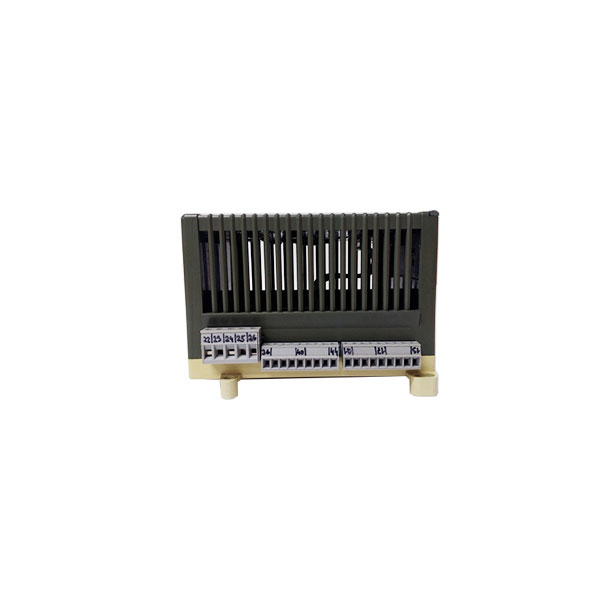
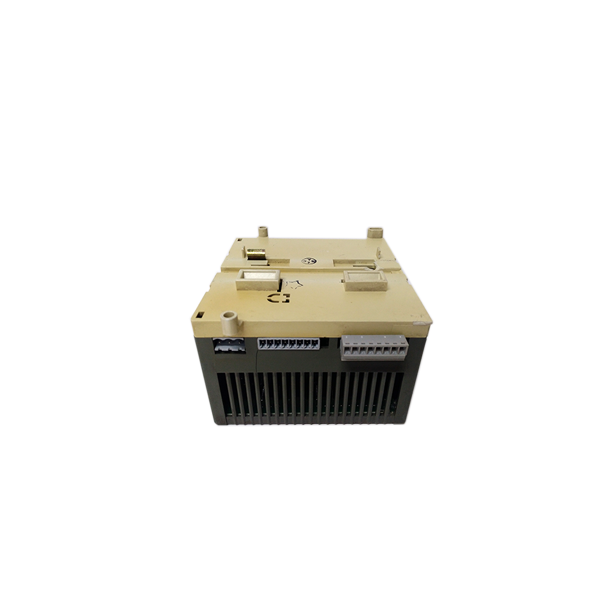
Mounting: DIN-rail or panel mounting.
4. System Integration
-
Role in a Generator Control System: It works in conjunction with the Governor (speed control) and Automatic Voltage Regulator (AVR). Upon a start command, it takes over the fine-tuning of frequency and voltage before issuing the final closing command.
-
Typical Wiring: Connects to:
-
Voltage Transformers (VTs) on the Generator and Busbar.
-
Circuit breaker’s closing coil.
-
Governor and AVR raise/lower interfaces.
-
Plant control system via communication or hardwired I/O.
-
-
Commissioning: Requires careful setting of parameters such as allowable voltage difference, frequency difference (slip), phase angle window, circuit breaker closing time, and pulse durations for governor/AVR control.
5. Typical Applications
-
Power Plants: Synchronizing diesel, gas, hydro, or steam turbine generators to a plant bus or the utility grid.
-
Industrial Plants: For cogeneration (CHP) generators connecting to the factory electrical system.
-
Marine & Offshore: Synchronizing generator sets on ships or offshore platforms.
-
Utility Substations: For busbar coupling or line synchronization.
Reviews
There are no reviews yet.