

Description
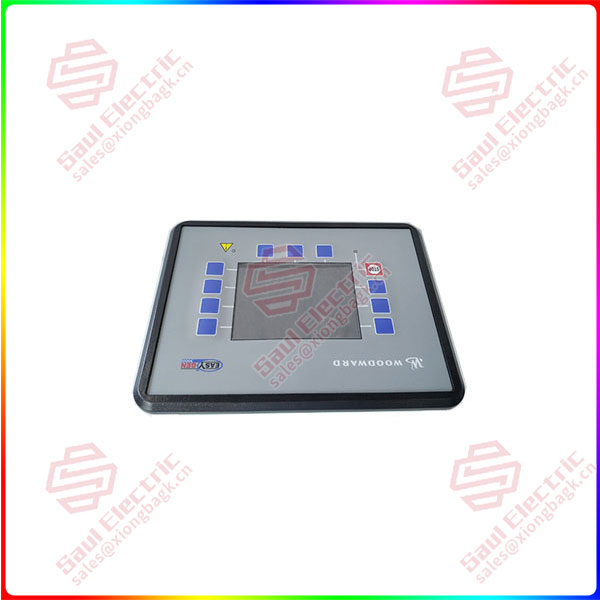
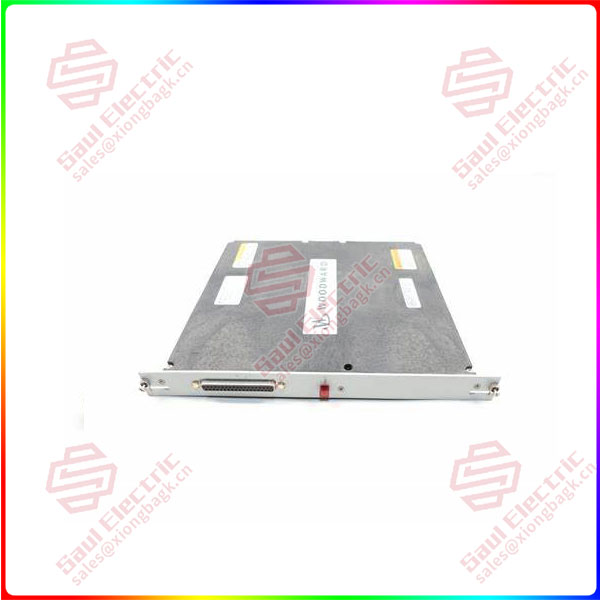
WOODWARD 8440-1409 — Technical Overview
Product: 8440-1409, Servo Driver / Actuator Control Module
Manufacturer: Woodward, Inc.
Primary Application: A digital servo driver/amplifier module designed for precise closed-loop control of electro-hydraulic actuators (EHAs) or electro-mechanical actuators used in gas turbine, steam turbine, and large engine control systems for positioning fuel valves, inlet guide vanes, and other critical control elements.
1. Core Overview & Positioning
The Woodward 8440-1409 is a component within Woodward’s extensive 8440 series of control modules. It functions as a dedicated servo controller, bridging the gap between a primary digital governor (like a Woodward 723PLUS or NetCon) and the final actuating device. Its primary role is to execute high-speed, closed-loop position control, ensuring the actuator accurately follows commands from the main controller.
Key Concept: It forms the inner loop of a cascade control system, translating a low-power position command into a high-power, modulated output to drive a servo valve coil or actuator motor, while continuously monitoring actual position via feedback from an LVDT/RVDT sensor.
2. Key Features & Functions
-
Closed-Loop Position Control: Implements a fast digital control algorithm (typically PID-based) to maintain precise actuator position by comparing the command signal with real-time feedback from a Linear Variable Differential Transformer (LVDT) or Rotary Variable Differential Transformer (RVDT).
-
Dual Input Processing:
-
Command Input: Accepts an analog position setpoint (typically ±10V DC or 4-20mA) from the primary speed/load controller.
-
Feedback Input: Interfaces with an AC-excited LVDT/RVDT attached to the actuator to measure actual position.
-
-
High-Current Output Drive: Provides a modulated current output (typically in the range of ±40 mA to ±200 mA) capable of driving the inductive coil of a proportional or servo-proportional hydraulic valve.
-
Integrated Diagnostics & Protection:
-
Continuous monitoring of LVDT/RVDT health (signal level, frequency, phase).
-
Coil and driver stage fault detection (open circuit, short circuit, over-current).
-
Detection of excessive position error (deviation between command and feedback).
-
-
Field-Configurable Parameters: Allows tuning of servo loop gains (Proportional, Integral, Derivative), current limits, LVDT excitation, and response characteristics via configuration software (Woodward Toolkit) to match the specific actuator dynamics.
-
Communication Interface: Typically includes a Woodward proprietary communication port (e.g., for Gov. Bus/NetBus) for integration with the primary controller, configuration, and diagnostics.
3. Common Technical Specifications
-
Part Number Context: The
-1409suffix specifies this exact variant’s hardware configuration, input/output ranges, and firmware features. -
Command Input: Configurable analog input, typically ±10V DC or 4-20mA.
-
Feedback Input: Designed for industry-standard AC LVDT/RVDTs (common excitation: 3 Vrms @ 2.5 kHz or 5 Vrms @ 5 kHz).
-
Output Drive: Current output suitable for driving standard servo valve coils.
-
Power Supply: Requires external DC power, commonly ±15V DC for control circuitry and a separate +24V to +80V DC for the power output stage.
-
Physical Form: A printed circuit board (PCB) assembly designed for mounting in a Woodward control cabinet or a dedicated drive chassis.
-
Status Indicators: LEDs for power, status, and fault conditions.
4. System Integration & Configuration
-
Role in Control Hierarchy: Acts as a slave drive unit to a primary Woodward Digital Governor. It executes precise position commands but relies on the master for the overall control strategy.
-
Configuration Software: Entirely configured and tuned using Woodward Toolkit PC software. The process involves:
-
Hardware Setup: Defining I/O signal types and scaling.
-
LVDT Calibration: Mapping the LVDT’s electrical output to the actuator’s physical stroke (min/max travel).
-
Servo Tuning: Adjusting PID and dynamic compensation parameters to achieve optimal step response—fast and stable without oscillation—specific to the connected actuator.
-
-
Integration: Installed in a slot within a Woodward control rack or enclosure. It interfaces with the actuator’s LVDT and servo valve, and communicates with the primary controller over a dedicated bus.
5. Typical Applications
This module is critical in applications requiring precise and reliable actuation for prime mover control:
-
Gas Turbine Control: Driving fuel metering valves, gas control valves, and inlet guide vanes (IGVs).
-
Steam Turbine Governing: Positioning governor valves and intercept valves.
-
Diesel Engine Control: Governing actuators for fuel injection systems.
-
Compressor Control: Driving anti-surge control valves.
Reviews
There are no reviews yet.