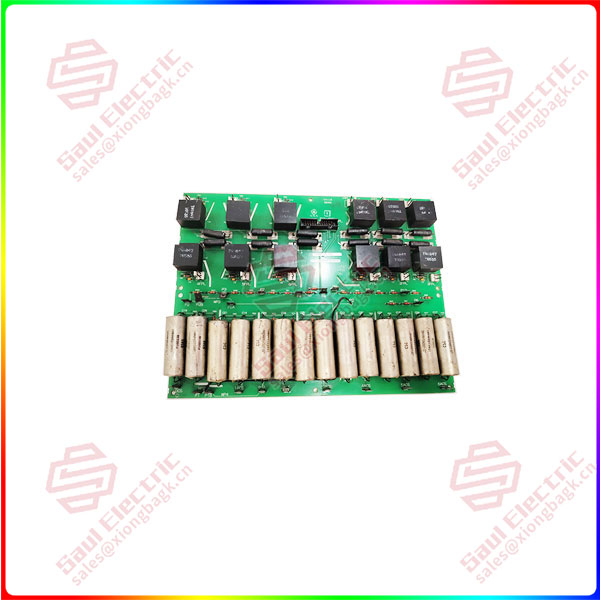
GE IS230STAOH2A: 16-Channel Analog Output Module for Turbine Control and Automation
GE’s IS230 Module Provides Critical Output Interface for Mark VIeS Safety Systems
Introduction:
The GE IS230STAOH2A is a 16-channel, isolated analog output module designed for the Mark VIeS Speedtronic™ Turbine Control System. This module is a critical component in applications requiring high-density, reliable analog signaling for safety and control functions. It is engineered to convert digital commands from the control system into precise 4-20 mA analog outputs, driving critical field devices such as actuator positioners, valve controllers, and other final control elements in gas and steam turbine installations. Its design emphasizes integrity and reliability for continuous operation in demanding power generation environments.
Key Features and Benefits:
-
High-Density Isolated Outputs: Provides 16 individually isolated analog output channels, maximizing I/O capacity within a single control rack slot. This design reduces hardware footprint, simplifies cabinet layout, and lowers overall system wiring complexity and cost.
-
Safety and Control System Integration: As part of the Mark VIeS platform, the module integrates seamlessly with the system’s high-speed backplane and is fully supported by GE’s ToolboxST application. It enables deterministic performance for both standard control and safety-related functions, where signal integrity is non-negotiable.
-
Precision and Reliability: Delivers highly accurate and stable current output with excellent noise immunity. The channel-to-channel isolation prevents ground loops and cross-talk, ensuring that each output remains clean and unaffected by disturbances in other channels or field wiring, which is critical for maintaining precise control loops.
-
Robust Industrial Design: Built to operate reliably in harsh plant conditions, including wide temperature ranges and vibration. The module’s construction supports the high availability and fault-tolerant operation required for 24/7 power generation, minimizing the risk of unscheduled downtime.
Industry Impact:
The IS230STAOH2A is fundamental for executing accurate control strategies in turbine systems. Its performance directly influences key operational parameters such as turbine speed, load, and temperature control. By providing reliable analog outputs, it ensures that control actions are accurately carried out in the field, supporting efficient combustion, optimal performance, and compliance with operational and emissions standards. Its role in safety systems also contributes to the overall protection of high-value turbine assets.
Future Outlook:
With the increasing need for grid stability and flexible power generation, the demand for precise and reliable turbine control continues to grow. Modules like the IS230STAOH2A, with their high density and robust performance, are essential for enabling advanced control algorithms that allow turbines to respond rapidly to grid demands. Furthermore, the diagnostic capabilities and health data from such modules support predictive maintenance strategies and integration into digital plant platforms, enhancing overall asset management and operational intelligence.
Conclusion:
The GE IS230STAOH2A analog output module is a vital interface within the Mark VIeS control system, bridging digital control logic with physical process actions. Its high channel count, isolation, and reliability make it a key enabler for precise, safe, and efficient turbine operation. By ensuring accurate execution of control commands, it helps power generation facilities maintain performance, safety, and readiness in an evolving energy landscape, solidifying its role as a critical component in modern turbine automation.