

Description
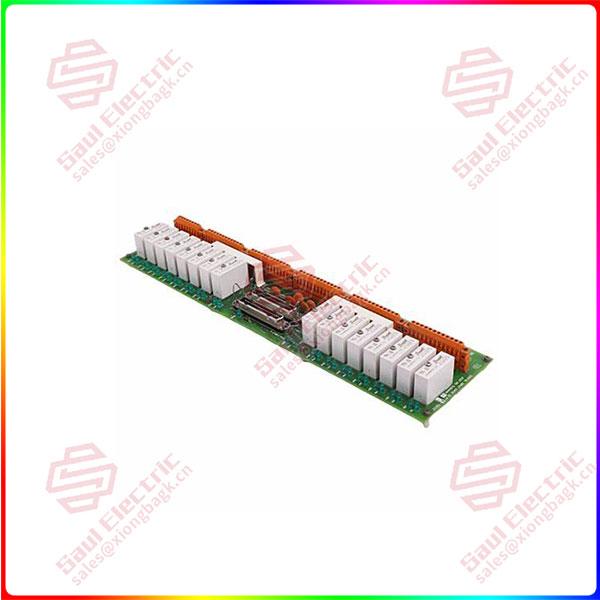
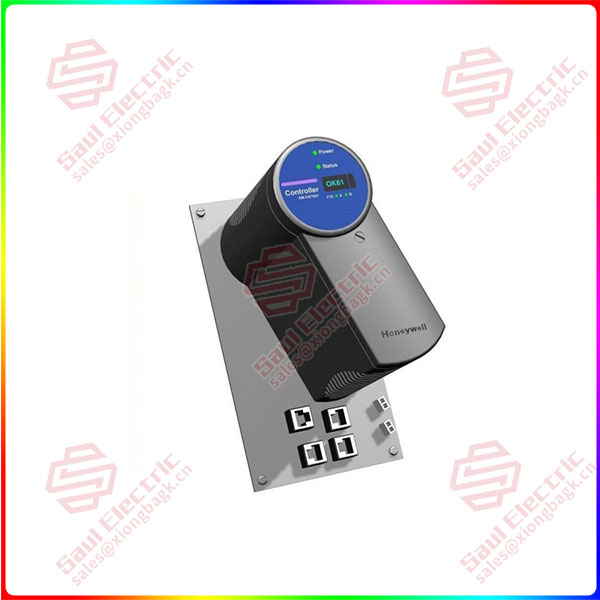
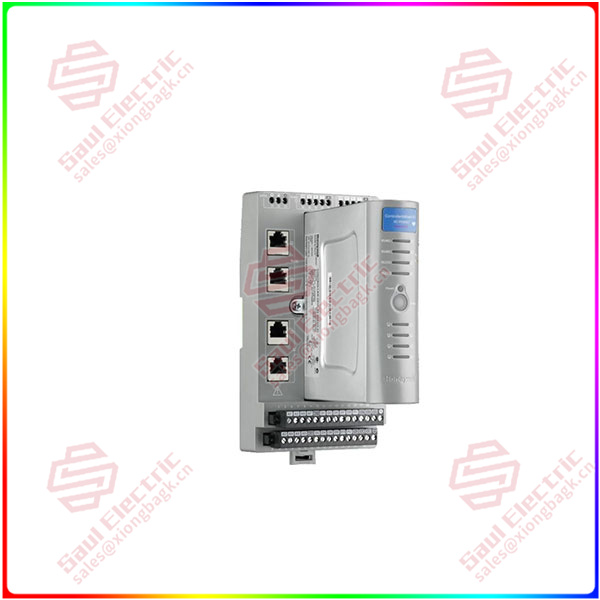
HONEYWELL FC-TSKUNI-1624 — Universal Field Controller
Product: FC-TSKUNI-1624, Universal Field Controller Module
Manufacturer: Honeywell International Inc.
Product Line: Excel 5000 / WEBs Building Management System (BMS)
Primary Application: A universal, programmable field controller designed for the monitoring and control of HVAC equipment, lighting, and other building systems in commercial, industrial, and institutional facilities. It acts as a local intelligence unit within a distributed building automation network.
1. Core Overview & Positioning
The Honeywell FC-TSKUNI-1624 is a flexible, stand-alone controller from Honeywell’s Excel 5000 family, now also integrated into the Niagara Framework-based WEBs (Wireless Enabled Building Solutions) platform. The «UNI» in the model indicates its universal nature, capable of handling a wide variety of inputs and outputs through configurable points.
Key Philosophy: It provides a powerful, localized processing node that can execute complex control sequences independently, reducing the load on central servers and increasing system reliability. It connects to a supervisory network (like WEBs-Nx) to report data and receive schedules/commands.
2. Key Features & Functions
-
Flexible, Configurable I/O: The core feature is its universal input/output points. These points are not hardware-fixed; they are software-configurable in the field to act as:
-
Analog Inputs (AI): For 0-10V, 0-20mA, 4-20mA, or resistance (RTD, potentiometer) signals from sensors (temperature, humidity, pressure, CO₂).
-
Digital Inputs (DI): For contact closures (dry contacts) from switches, flow switches, or status contacts.
-
Analog Outputs (AO): For 0-10V or 4-20mA signals to control devices like valve actuators, variable frequency drives (VFDs), or damper motors.
-
Digital Outputs (DO): Triac or relay outputs to start/stop motors, open/close valves, or energize alarms.
-
-
Powerful Local Processing: Equipped with a 32-bit microprocessor capable of running complex control applications, PID loops, and custom logic programs written in Honeywell Control Language (HCL) or standard programming languages within the Niagara Framework.
-
Standalone Operation: Can maintain and execute its control program even if communication to the central supervisor is lost, ensuring continued building operation.
-
Comprehensive Communication:
-
C-Bus (Controller Bus): Honeywell’s proprietary, high-speed peer-to-peer network for connecting multiple Excel 5000 controllers for coordinated control (e.g., chiller plant sequencing).
-
LON (LonWorks) or BACnet: Often includes a port for integration into open protocol BMS networks.
-
Supervisor Network: Connects to a WEBs Supervisor or Enterprise Server via Ethernet (TCP/IP) or serial for monitoring, data logging, and global scheduling.
-
-
Non-Volatile Memory: Retains its application program and configuration during power loss.
3. Model Number & Technical Specifications
Common/Inferred Technical Specifications:
-
Processor: 32-bit RISC processor.
-
Memory: Flash memory for application storage, RAM for runtime.
-
I/O Points: A mix of universal configurable points (e.g., 6 UI/UC) and possibly dedicated digital inputs/outputs. Each universal point is individually software-configured for its function (AI, DI, AO, DO).
-
Power Supply: 24 VAC or 24 VDC (typically, as standard for building automation).
-
Operating Temperature: 0°C to 50°C (32°F to 122°F).
-
Communication Ports:
-
C-Bus Port: For peer networking with other Honeywell controllers.
-
Service Port: RS-232 for direct laptop connection (using a USB converter).
-
Network Port: Likely an Ethernet (RJ-45) port for TCP/IP connection to the BMS network.
-
-
Mounting: DIN-rail mountable enclosure.
4. System Integration & Engineering
-
Role in BMS Hierarchy: It is a field-level controller. It interfaces directly with sensors and actuators in the mechanical room or on the equipment. It reports data to and can be overridden by a supervisory-level workstation (WEBs Supervisor).
-
Engineering Software: Programmed and configured using:
-
Honeywell CARE (Computer Aided Regulation Engineering): The traditional software for Excel 5000 controllers.
-
Niagara Workbench: The modern framework for WEBs systems, where the controller appears as a «station» to be configured.
-
-
Configuration Steps:
-
Define the physical hardware (I/O points, their types, and scaling).
-
Create control applications using function block diagrams, HCL, or other Niagara programming tools.
-
Define alarms, trends, and schedules.
-
Bind controller points to the graphics and database on the supervisor.
-
-
Typical Integration: Used to control complex HVAC equipment like Air Handling Units (AHUs), Fan Coil Units (FCUs), heat pumps, or small packaged rooftop units.
5. Typical Applications
-
Air Handling Unit (AHU) Control: Managing fans, heating/cooling coils, humidifiers, and dampers with sequences for morning warm-up, economizer operation, and supply air temperature reset.
-
Variable Air Volume (VAV) Box Control: (When configured as a zone controller).
-
Chiller, Boiler, or Cooling Tower Plant Sequencing: Multiple FC-TSKUNI controllers can communicate via C-Bus to sequence multiple chillers based on load.
-
Lighting Control: For scheduling and occupancy-based control of lighting circuits.
-
Energy Management: Implementing demand limiting, load shedding, and optimal start/stop routines.
Reviews
There are no reviews yet.