

Description
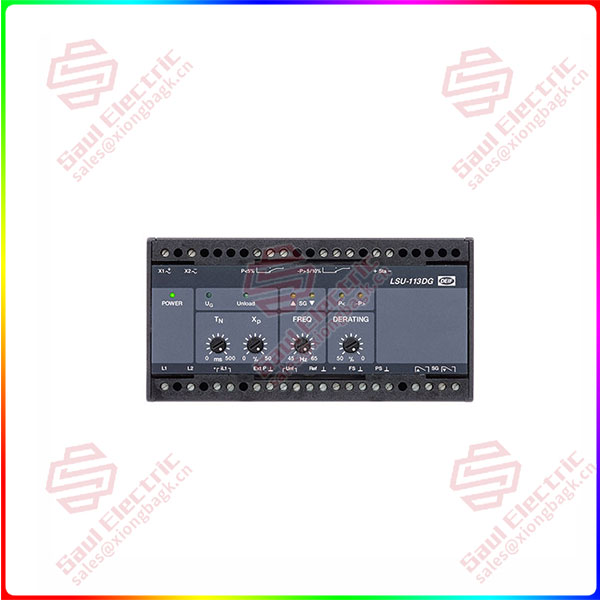
DEIF AGC 242 — Multi-Function Generator Controller
Product: AGC 242 (Automatic Generator Controller)
Manufacturer: DEIF A/S
Primary Application: A compact, multi-functional generator controller designed for automatic control, protection, and monitoring of single or multiple generator sets (gensets) in marine, offshore, and land-based power generation applications.
1. Core Overview & Positioning
The DEIF AGC 242 is a versatile and cost-effective controller from DEIF’s AGC 200 series. It serves as the central intelligence for a generator, integrating essential functions for automatic operation, synchronization, load sharing, and protection into a single, user-friendly unit. It’s particularly suited for auxiliary or smaller main generator sets where space and simplicity are key.
Key Philosophy: It provides «all-in-one» control, replacing the need for separate devices for synchronization, protection, and engine management.
2. Key Features & Functions
-
Automatic Genset Control:
-
Automatic Start/Stop: Manages start sequences, cool-down periods, and shutdown logic.
-
Mains Failure Detection: Automatically starts the genset upon utility power failure.
-
Load Demand Management: Can start/stop multiple gensets based on load (with additional modules).
-
-
Synchronization & Load Sharing:
-
Auto-Synchronization: Automatically synchronizes the generator to the busbar (utility or other genset) by matching voltage, frequency, and phase angle.
-
Isochronous Load Sharing (Optional): When equipped with the PCC 200 module or connected via CAN bus to other DEIF controllers, it enables proportional real power (kW) sharing between parallel-running generators.
-
Power Control: Controls import/export when synchronized to a utility grid.
-
-
Comprehensive Protection: Monitors and protects the generator and engine with a wide range of adjustable setpoints:
-
Generator Protection: Over/under voltage & frequency, overcurrent, reverse power.
-
Engine Protection: Overspeed, low oil pressure, high coolant temperature, start failure, etc.
-
-
Measurement & Display:
-
Clear HMI: Features a backlit graphical display for showing key parameters (Volts, Hz, kW, kWh, current, etc.), status, and alarms.
-
Extensive Metering: Measures all essential electrical parameters on all phases.
-
-
Communication & Integration:
-
Built-in RS485 port with support for Modbus RTU.
-
CAN bus interface (J1939 or CANopen) for connecting to modern engine ECUs and other DEIF controllers (e.g., for multi-genset systems).
-
Multiple programmable digital inputs/outputs for external control and alarm signaling.
-
3. Common Technical Specifications
-
Power Supply: Wide range, typically 18-72 V DC (suitable for 24V systems) or an AC/DC variant.
-
Generator Inputs:
-
Voltage: Up to 600V AC L-L (direct or via Potential Transformers).
-
Current: 1A or 5A AC (via Current Transformers — CTs).
-
-
Engine Interface:
-
Analog/digital inputs for sensors (temp, pressure, etc.).
-
Digital outputs for fuel solenoid, start signal, etc.
-
CAN bus for direct communication with compatible engine ECUs (e.g., Caterpillar, Volvo, MTU).
-
-
Synchronization: Built-in sync-check relay.
-
Mounting: Panel-mount design.
-
Environmental: Designed for rugged use, with high immunity to vibration and electromagnetic interference.
4. System Integration & Architecture
-
Standalone Controller: Can operate a single genset independently.
-
Multi-Genset Systems: Multiple AGC 242 units can be connected via their CAN bus to form a decentralized, masterless load-sharing system when combined with a DEIF PPM 200 (Power Plant Manager) or a PCC 200 module for advanced power management.
-
Integration: Easily connects to vessel/plant automation systems (SCADA, BMS) via Modbus.
-
Configuration: Programmed via the front-panel buttons or using DEIF’s PC-Tool 200 software for more complex setups.
5. Typical Applications
-
Marine & Offshore: Auxiliary generators on ships, offshore supply vessels, and platforms.
-
Land-Based Standby Power: Emergency generators for hospitals, data centers, and commercial buildings.
-
Prime Power: For smaller industrial sites, construction, or island-mode operations.
-
Small Power Plants: As the core controller for individual gensets in a multi-genset power plant (with PCC/PPM).
Reviews
There are no reviews yet.