

Description
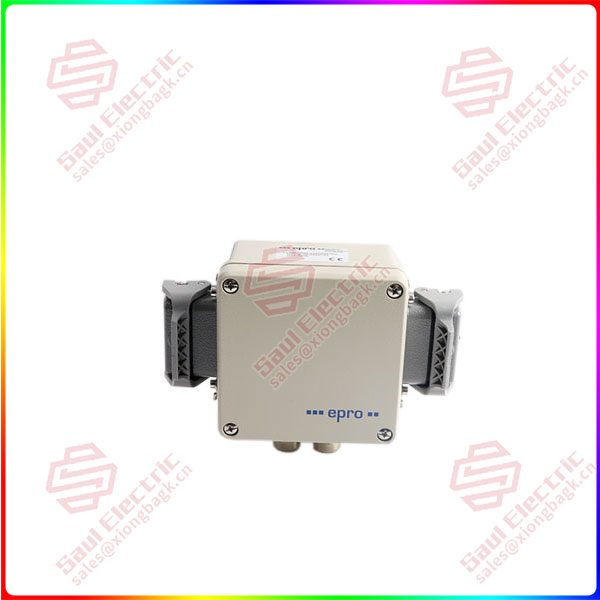
EPRO MMS3125/022-020 — Vibration Monitoring Module
Product: MMS3125/022-020, Vibration Monitoring Module
Manufacturer: EPRO (now part of Baker Hughes)
Product Line: MMS 3000 Machinery Protection System
Primary Application: A dual-channel vibration monitoring module designed for continuous monitoring and protection of rotating machinery by measuring relative shaft displacement using eddy current proximity probes.
1. Core Overview & System Context
The EPRO MMS3125/022-020 is a key component of the EPRO MMS 3000 machinery protection system. This rack-mounted module accepts signals from non-contact eddy current proximity probes (such as EPRO PR 64xx series) to monitor the radial vibration (X and Y directions) or axial position of a rotating shaft.
Key Function: It provides continuous monitoring, display, and alarm functionality for two independent vibration/position channels. It converts the raw signals from proximity probes into calibrated engineering values (µm or mils peak-to-peak for vibration, mm or mils for position) and compares them against programmable alarm setpoints to protect critical machinery like turbines, compressors, and pumps.
2. Key Features & Functions
-
Dual-Channel Monitoring: Each module independently processes signals from two proximity probes.
-
Comprehensive Parameter Measurement:
-
Dynamic Vibration: Measures the AC component (peak-to-peak or RMS) for radial vibration analysis.
-
Static Position: Measures the DC gap voltage for axial thrust position or average radial position monitoring.
-
Gap Voltage: Direct readout of the average probe-to-shaft distance.
-
-
Programmable Protection: Features adjustable Danger and Alert setpoints for each measured parameter. When a setpoint is exceeded, the module triggers relay outputs.
-
Buffered Outputs: Provides isolated 4-20 mA outputs proportional to the vibration/position for connection to DCS, PLCs, or data collectors.
-
Output 1: Typically proportional to dynamic vibration (0-100 µm = 4-20 mA).
-
Output 2: Typically proportional to static position or gap voltage.
-
-
Sensor Diagnostics: Continuously monitors the health of the connected proximity probe and extension cable system. Can detect:
-
Probe/Coil break (Open circuit)
-
Cable short circuit
-
Proper probe functioning
-
-
Modular & Scalable: Designed to be installed in a 19-inch rack/card frame (e.g., EPRO MMS 3000/6000 series frames) alongside other monitoring modules (speed, temperature, etc.).
3. Model Number Breakdown & Specifications
Common Technical Specifications:
-
Input: Two independent channels for connecting EPRO-compatible proximity probe systems (Probe + Extension Cable + Driver).
-
Dynamic Vibration Range: Typically 0-100 µm (0-4 mils) peak-to-peak or similar, field-selectable.
-
Frequency Response: 0.5 Hz to 3000 Hz (for vibration measurement).
-
Gap Voltage Range: -2 V to -18 V DC (standard for 8 mm probes).
-
Analog Outputs: Two isolated 4-20 mA outputs (one per channel).
-
Relay Outputs: Typically 2 or 3 changeover relays per channel for Alert and Danger alarms.
-
Power Supply: 24 V DC (typical for MMS 3000 series).
-
Display: Front-panel LED or LCD display for showing measured values and status.
4. System Integration & Configuration
-
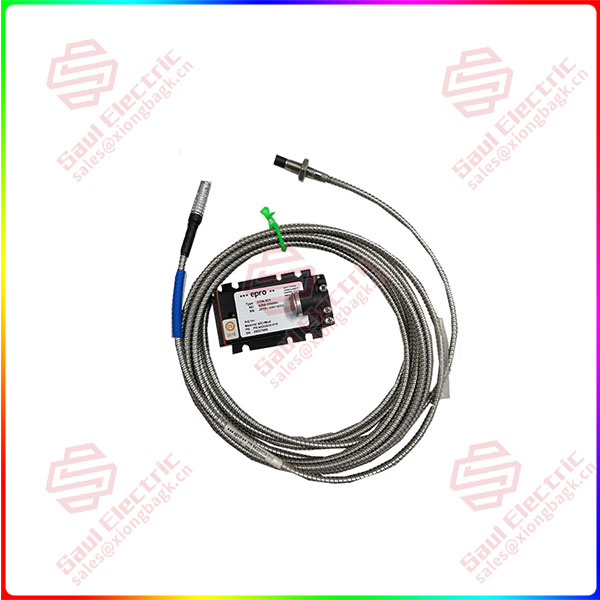
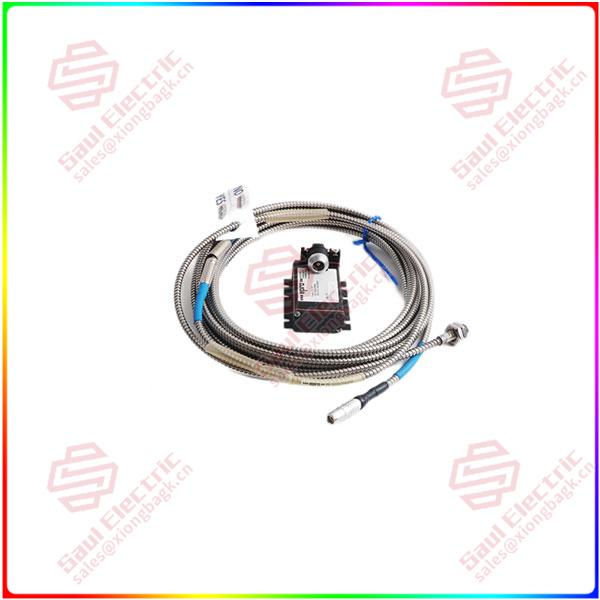
Sensor Connection: Connects to a proximity probe system, which consists of:
-
Probe (e.g., PR 6423) mounted near the shaft.
-
Extension Cable.
-
Driver/Converter (e.g., CON 0x1) that powers the probe and provides the signal to the MMS3125.
-
-
System Integration: The module slides into a slot in an MMS 3000 rack. It receives power from the rack’s backplane and can communicate alarm statuses to a system controller or annunciator within the same rack.
-
Configuration: Setpoints (Alert, Danger), measurement ranges, and output scaling are configured via DIP switches or potentiometers on the module’s front panel. No external software is typically required for basic setup.
5. Typical Applications
-
Radial Vibration Monitoring: Two modules (four channels) are often used to monitor X and Y direction vibration on both drive-end and non-drive-end of a turbine or compressor.
-
Axial (Thrust) Position Monitoring: A single channel can be used to monitor the axial movement of a thrust collar.
-
Keyphasor® Monitoring: One channel of a module can be dedicated to process a Keyphasor signal (once-per-revolution pulse) for phase reference.
-
Critical Rotating Machinery: Gas & Steam Turbines, Centrifugal Compressors, Turbo-Generators, Large Pumps and Fans.
Reviews
There are no reviews yet.