

Description
MOOG G771K202A — Technical Overview
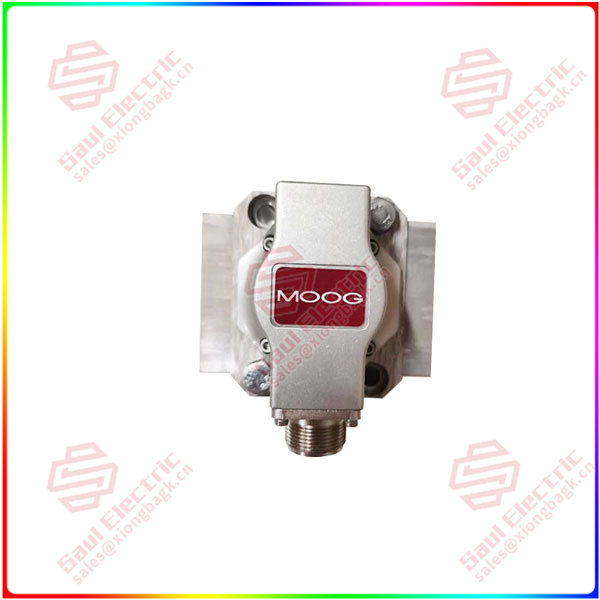
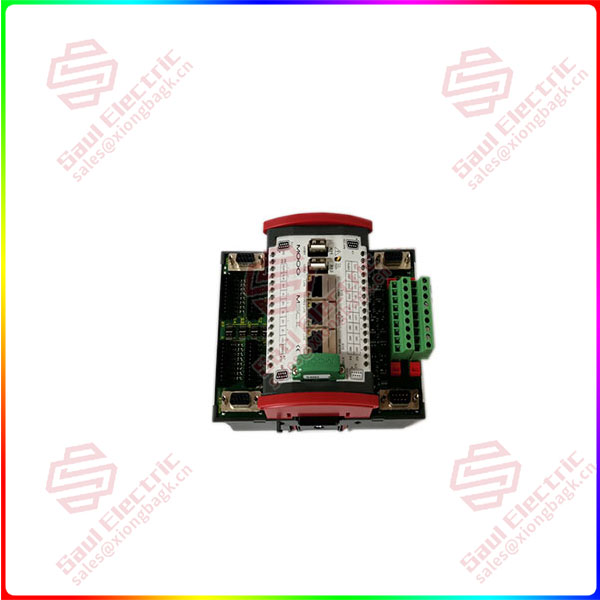
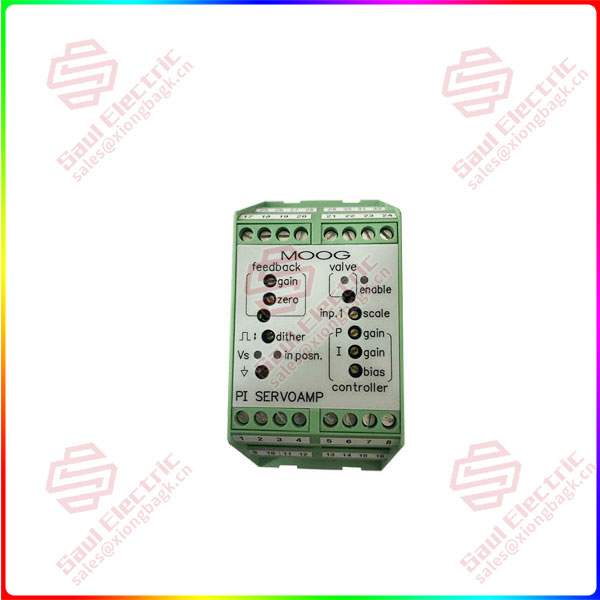
Product: G771K202A, Servo Control Module / Electronic Drive Unit
Manufacturer: Moog Inc.
Primary Application: A high-performance servo controller/amplifier module designed for precise closed-loop control of electro-hydraulic servo valves (EHSV), electro-mechanical actuators (EMA), or other proportional devices in demanding motion control applications within aerospace, defense, and industrial automation.
1. Core Overview & Positioning
The Moog G771K202A is a specialized electronic control module from Moog’s G771 series of servo controllers. It functions as the intelligent power and control interface between a motion controller (host computer/PLC) and a high-performance servo actuator. Its primary role is to execute precise closed-loop control algorithms, driving an actuator to accurately follow a position, velocity, or force command.
Key Philosophy: It provides the necessary signal conditioning, power amplification, and high-speed control logic to transform a low-level command signal into a precise, high-power output capable of driving demanding servo loads with exceptional dynamic response and stability.
2. Key Features & Functions
-
Closed-Loop Servo Control: Implements advanced control algorithms (typically PID with velocity/acceleration feedforward, notch filters, and advanced compensation) to minimize the error between the command signal and the actual feedback from a position/velocity transducer (e.g., LVDT, RVDT, resolver).
-
High-Current Output Stage: Contains a power amplifier designed to deliver the specific current (often in the range of ±100mA to ±2A) required to drive the inductive coil of a high-performance Moog servo valve or the windings of a torque motor.
-
Flexible Input Configuration:
-
Command Input: Accepts an analog command signal (typically ±10V DC differential).
-
Feedback Input: Primarily designed for AC-excited LVDT (Linear Variable Differential Transformer) or RVDT (Rotary Variable Differential Transformer) feedback, providing the excitation signal and measuring the return amplitude/phase to determine actuator position.
-
-
Comprehensive Diagnostics & Protection:
-
Continuous monitoring for coil faults (open circuit, short circuit).
-
Feedback sensor health monitoring (signal level, frequency).
-
Overtemperature protection for the output stage.
-
Command-Feedback discrepancy (excessive following error) detection.
-
-
Field Configurable: Control loop parameters (Proportional, Integral, Derivative gains, feedforward gains, filter frequencies, current limits) are adjustable, typically via Moog configuration software or a programming pendant, allowing the drive to be tuned for the specific actuator and load dynamics.
-
Robust Design: Engineered for reliable operation in harsh environments, with protection against vibration, shock, and wide temperature ranges. The PCB is often conformally coated.
3. Model Number Analysis & Specifications
Inferred Technical Specifications (Must be verified with official datasheet):
-
Output Drive: Current output, likely in the range suitable for Moog G631, G761 series servo valves.
-
Command Input: ±10V DC differential, high impedance.
-
Feedback: AC LVDT/RVDT input with programmable excitation.
-
Power Supply: Requires external DC power supplies, typically ±15V DC for control logic and a higher voltage (e.g., +24V to +80V DC) for the output stage.
-
Communication: May include a service port (RS-232/422/485) for configuration and monitoring via Moog software tools.
-
Form Factor: Typically a printed circuit board (PCB) assembly designed for chassis or enclosure mounting.
4. System Integration & Application
-
Role in Control Chain: It acts as the dedicated servo drive in a hierarchical system:
-
Host Motion Controller calculates trajectory → sends Analog Command to G771K202A.
-
G771K202A processes command and LVDT feedback → outputs Drive Current to Servo Valve.
-
Servo Valve controls hydraulic flow → moves Actuator/Piston.
-
LVDT on actuator provides Position Feedback to G771K202A, closing the loop.
-
-
Configuration & Tuning: Essential for performance. Using Moog software (e.g., Moog Servo Driver Suite or a dedicated programmer), an engineer must:
-
Set LVDT excitation parameters.
-
Perform LVDT null/span calibration.
-
Tune the PID and feedforward gains to achieve the desired step response (fast, stable, without overshoot).
-
-
Integration: Mounted in a system control cabinet, interfacing with a higher-level multi-axis controller (like a Moog MCU-2000) or a custom automation system.
5. Typical Applications
-
Industrial Automation & Test:
-
Servohydraulic Test Systems: Driving actuators in materials testing machines (fatigue, structural testing).
-
Simulator Motion Bases: Controlling hydraulic actuators for flight, driving, or marine simulators.
-
Precision Industrial Machinery: For controlling rollers, knives, or presses requiring ultra-precise, high-force motion.
-
-
Aerospace & Defense:
-
Flight Control Actuation: Research and development test rigs for control surfaces.
-
Fuel Control Systems: For gas turbine engine test stands.
-
Specialized Vehicle Control: Turret stabilization, weapon pointing systems.
-
Reviews
There are no reviews yet.