

Description
Product Overview
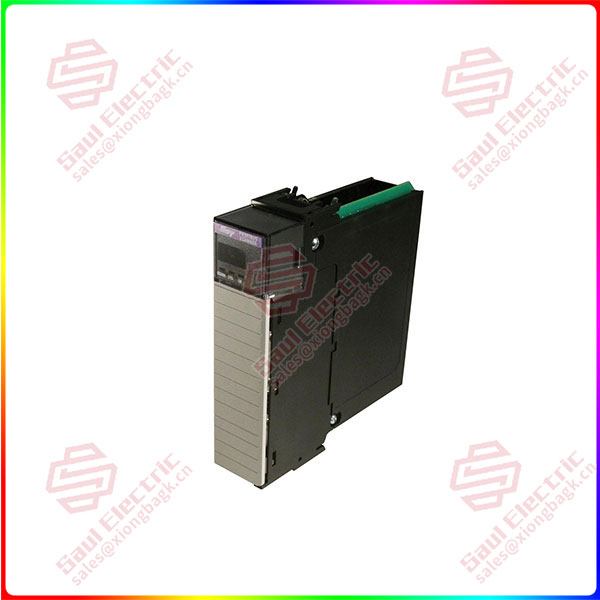
The SST SST-PB3-PCU-2-B is a Profibus DP/DPV1 Slave Communication Module manufactured by SST (Woodhead Connectivity, now part of Advantech). It functions as a gateway or network interface card that enables non-Profibus devices or equipment to communicate on a Profibus DP (Decentralized Periphery) network. The module acts as a slave device on the Profibus network, receiving output data from and sending input data to a master controller (e.g., a PLC such as Siemens S7-300/400, S7-1500, or other Profibus Master). The suffix designations typically detail specific features like power input, connector type, or firmware version.
The value of the SST-PB3-PCU-2-B lies in its role as a versatile and configurable connectivity solution. It allows equipment that has a simple parallel or serial interface (like a digital/analog I/O block, a sensor cluster, a drive, or even a custom machine) to be seamlessly integrated into a standardized, high-speed Profibus DP industrial network. This eliminates the need for proprietary or point-to-point wiring, centralizes data acquisition, and enables sophisticated control strategies. For system integrators and engineers, this module is a key tool for modernizing legacy equipment or integrating third-party devices into a Profibus-controlled automation system, thereby enhancing system interoperability and data visibility.
Technical Specifications
|
Parameter Name
|
Parameter Value
|
|---|---|
|
Product Model
|
SST SST-PB3-PCU-2-B
|
|
Manufacturer
|
SST (originally Woodhead Connectivity, now an Advantech brand)
|
|
Product Series
|
SST-PB3 Series (Profibus DP Slave Communication Modules)
|
|
Primary Function
|
Profibus DP/DPV1 Slave Interface Module (Intelligent Gateway)
|
Communication & Network
-
Protocol: Profibus DP compliant to EN 50170, supporting both DP-V0 (cyclic data exchange) and DP-V1 (acyclic data exchange for parameterization, diagnostics).
-
Baud Rate: Auto-baud detection, supporting standard rates from 9.6 kbps up to 12 Mbps.
-
Address Setting: Set via DIP switches or rotary switches on the module (method depends on specific hardware variant).
-
GSD File: Requires a specific GSD (Gerätestammdatei / Device Master Data) file to be installed in the Profibus master’s configuration tool (e.g., Siemens STEP 7) for device configuration.Hardware Interface
-
Profibus Connector: Standard 9-pin D-sub female connector, with integrated terminating resistor switch (can be enabled if the module is at the end of the network segment).
-
Device Interface (User Side): The «-PCU» in the part number typically indicates a «Parallel Communication Unit». This interface is usually a high-density, multi-pin connector (e.g., a ribbon cable header) that connects to the user’s application board or I/O via a parallel data/address bus. It provides digital I/O lines, an address bus, and control signals for direct interfacing.
-
Configuration Interface: Often includes an RS-232 or USB port for initial firmware updates or advanced configuration via SST configuration software.Electrical & Environmental
-
Power Supply: The «-2-B» suffix likely specifies the power input requirements. It typically requires a +24V DC nominal power input, common in industrial control panels.
-
Isolation: Provides galvanic isolation between the Profibus network and the user device interface, protecting both sides from electrical noise and ground loop issues.
-
Operating Temperature: Typically 0 to 60°C (32 to 140°F)
-
Certifications: CE marked, and often complies with industrial EMC and safety standards.
Key Features and Advantages
Flexible Gateway Functionality: The SST-PB3-PCU module is essentially a programmable communication processor. It can be configured (via its GSD file and associated software) to map data between the Profibus network’s input/output image and the parallel I/O lines on its user interface. This allows it to mimic a simple remote I/O station or implement custom device profiles.
Ease of Integration for Non-Networked Devices: Its primary advantage is enabling «Profibus-enablement» of equipment lacking native network ports. By designing a simple interface board to connect to the module’s parallel bus, OEMs and integrators can efficiently bring their devices onto a Profibus network without developing a complex communication ASIC from scratch.
High Performance and Reliability: Supporting baud rates up to 12 Mbps ensures fast data exchange suitable for most real-time control applications. The built-in isolation enhances network stability and robustness in electrically noisy industrial environments. The use of a standard GSD file simplifies the configuration process within the master’s engineering environment.
Application Areas
The SST SST-PB3-PCU-2-B is used as a communication gateway in Profibus DP networks to integrate various devices that do not have native Profibus interfaces.
Typical applications include:
-
Legacy Equipment Modernization: Retrofitting older machines, panels, or sensors with a Profibus interface to connect them to a modern DCS or PLC system.
-
OEM Machine Building: Used by original equipment manufacturers to provide a standard Profibus DP interface option for their machines (e.g., packaging machines, test stands, specialized process units) without embedding a full PLC inside.
-
Custom I/O Subsystems: Acting as a Profibus head for a custom-built bank of digital/analog I/O, allowing centralized control and monitoring.
-
Intelligent Device Integration: Connecting complex devices like vision systems, barcode readers, or weighing scales that have a simple parallel or serial output to a Profibus network for control and data acquisition.
Related Products
-
Configuration Cable & Software: A specific RS-232 or USB configuration cable and the SST Configuration Tool or PHOENIX CONTACT PC WORX software (depending on the module generation) are required to set up the module’s data mapping and parameters.
-
Interface Adapter Board: A custom-designed PCB that adapts the module’s parallel bus to the specific signals of the target device. This is typically designed by the integrator or OEM.
-
Profibus Network Components: Profibus cables, connectors, repeaters, and terminators to build the network.
-
Profibus Master: A PLC or controller (e.g., Siemens S7-1500 with DP master module) that controls the network and exchanges data with this slave module.
-
Power Supply: A stable 24V DC power supply for the module.
Reviews
There are no reviews yet.