

Description
Product Overview
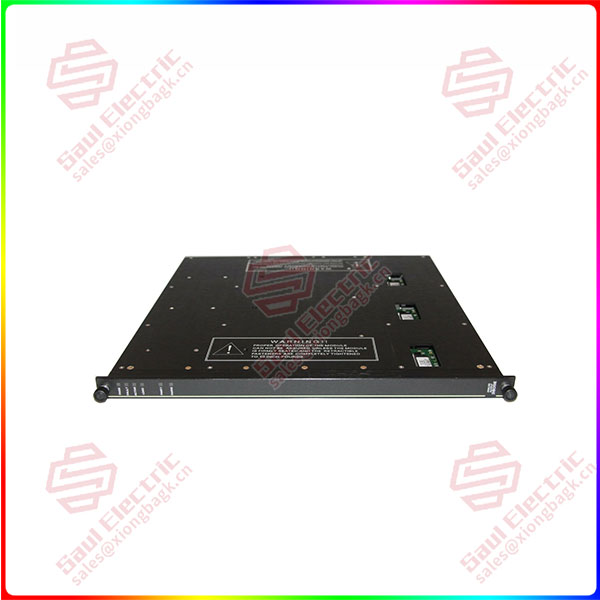
The Tricon 3805E is a high-performance, TMR (Triple Modular Redundant) Communication Module for the Tricon v9, v10, and v11 safety instrumented systems (SIS), manufactured by Invensys (now part of Schneider Electric). It serves as the primary communication gateway between a Tricon controller and external devices or networks, most notably for peer-to-peer communication in a TriStation network and for interfacing with Modbus TCP/IP Ethernet networks. The «E» suffix signifies its enhanced capabilities, particularly in Ethernet connectivity. This module is a critical component for building distributed, fault-tolerant safety systems where multiple Tricon controllers need to exchange data seamlessly and reliably, or where the safety system must communicate with plant-wide supervisory systems (like a DCS or SCADA) over standard Ethernet.
The core value of the Triconex 3805E lies in its fault-tolerant, high-availability communication within a TMR architecture. Unlike standard network cards, it embodies the same TMR philosophy as the main processor: it contains three independent communication channels that operate in parallel. A voting mechanism ensures that a single channel failure does not disrupt communication integrity. This design is paramount for Safety Instrumented Systems (SIS), where reliable data exchange for interlocking, voting, and shutdown logic is as critical as the processing itself. For engineers designing and maintaining critical process safety systems in industries like oil & gas, petrochemicals, and power generation, the 3805E is the trusted backbone for ensuring controllers can work together as a cohesive, fault-tolerant whole.
Technical Specifications
|
Parameter Name
|
Parameter Value
|
|---|---|
|
Product Model
|
Tricon 3805E
|
|
Manufacturer
|
Invensys Triconex (now part of Schneider Electric)
|
|
Product Family
|
Tricon Communication Module (v9, v10, v11 series)
|
|
Primary Function
|
Triple Modular Redundant (TMR) Communication Module for Peer-to-Peer (TriStation) and Modbus TCP/IP Networks
|
Communication & Networking
-
Primary Protocol: TriStation Network Protocol. Used for deterministic, high-speed communication between multiple Tricon controllers in a peer-to-peer ring or star topology.
-
Secondary Protocol: Modbus TCP/IP (Client/Server). Allows the Tricon to act as a Modbus TCP server (providing data to clients like HMIs/DCS) and/or client (requesting data from other devices).
-
Network Ports: 2 x RJ-45 Ethernet ports (10/100 Mbps). Often used with one port for the TriStation network and the other for the Modbus TCP/IP plant network, or for daisy-chaining.
-
Network Topology: Supports ring and star topologies for the TriStation network. Ring topology provides built-in communication path redundancy.
-
TMR Architecture: Contains three independent communication processors and circuits. Data is transmitted and voted across all three channels to ensure continued operation even if one channel fails.Hardware & Integration
-
Form Factor: A hot-swappable module that installs into a designated communication slot in a Tricon main chassis (e.g., 3008, 3009, 3510, 3511).
-
Chassis Compatibility: Compatible with Tricon v9, v10, and v11 series main chassis. Requires specific slot assignment (usually a dedicated comm slot).
-
LED Indicators: Comprehensive front-panel LEDs for status, fault diagnosis, and network activity for each of the three channels (A, B, C) and overall module health (OK, Fault).
-
Termination: For TriStation networks, requires a Triconex 9571 Ethernet Hub/Repeater or compatible managed switches configured for RSTP (Rapid Spanning Tree Protocol) to form a fault-tolerant ring.Electrical & Environmental
-
Power Consumption: Powered directly from the Tricon chassis backplane.
-
Operating Temperature: 0 to 60°C (32 to 140°F)
-
Certifications: Designed and tested for use in SIL 3 (IEC 61508) safety systems. Suitable for use in harsh industrial environments.
Key Features and Advantages
Inherent Fault Tolerance via TMR Design: This is the defining feature. The triple-redundant design ensures that a hardware fault in any single communication channel is masked by the other two. The system continues to operate without interruption, and the fault is reported for maintenance. This provides an unprecedented level of availability for safety-critical communications.
Dual-Protocol Support in a Single Module: The 3805E consolidates two critical networking functions: the proprietary, deterministic TriStation network for controller-to-controller communication and the universal Modbus TCP/IP for integration with the wider control system. This simplifies architecture and reduces hardware count.
High System Availability and Hot-Swap Capability: The module supports online insertion and removal (hot-swap). A failed module can be replaced without requiring a system shutdown, which is crucial for maintaining continuous process safety availability. Comprehensive diagnostics quickly identify a faulty module or network segment.
Deterministic Performance for Safety Systems: The TriStation network protocol is designed for predictable, timely data exchange between Tricon controllers, which is essential for executing coordinated safety functions across multiple system parts.
Application Areas
The Tricon 3805E is used in large, distributed, or highly available Safety Instrumented Systems (SIS) where multiple Tricon controllers must work together or communicate with external systems.
-
Distributed Fire & Gas (F&G) Systems: Multiple Tricon controllers across a facility, each handling a zone of gas detectors and alarms, use the 3805E and TriStation network to share data and implement plant-wide voting logic for emergency shutdown.
-
Large Process Shutdown (ESD/PSD) Systems: In massive facilities like LNG plants or refineries, the safety logic may be distributed across several Tricon racks. The 3805E modules form a high-integrity network for seamless inter-controller communication.
-
Turbomachinery Control (TMC) Integration: A Tricon SIS protecting a compressor train can use the 3805E’s Modbus TCP/IP client functionality to securely read critical data (vibration, temperature) from the turbine’s control system (TMC).
-
Integration with DCS/SCADA: The Modbus TCP/IP server function allows the plant’s Distributed Control System (DCS) or SCADA to securely read health status, process values, and alarms from the Tricon SIS for operator display and historical logging.
Related Products
-
Tricon Main Chassis: Such as the Tricon Chassis 3008, 3009, 3510, or 3511, which houses the 3805E module.
-
Tricon Main Processor (MP): Such as the 3008, 3009, 3510, or 3511 MP, which works in tandem with the 3805E.
-
TriStation Network Hub/Switch: The Triconex 9571 10Base-T Hub/Repeater is the traditional device for building the TriStation network ring. Modern installations may use managed Ethernet switches configured with RSTP.
-
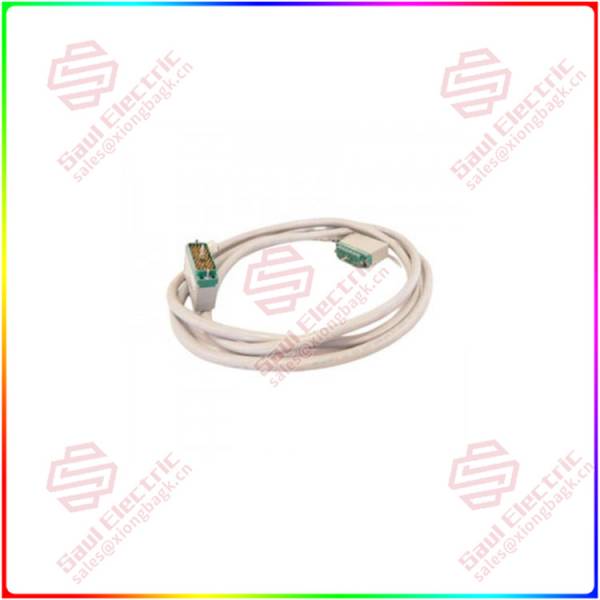
Triconex Communication Cables: Specific Ethernet cables or fiber optic cables for the TriStation network.
-
Programming & Configuration Software: Triconex TriStation 1131, which is used to configure the TriStation and Modbus TCP/IP parameters of the 3805E module.
-
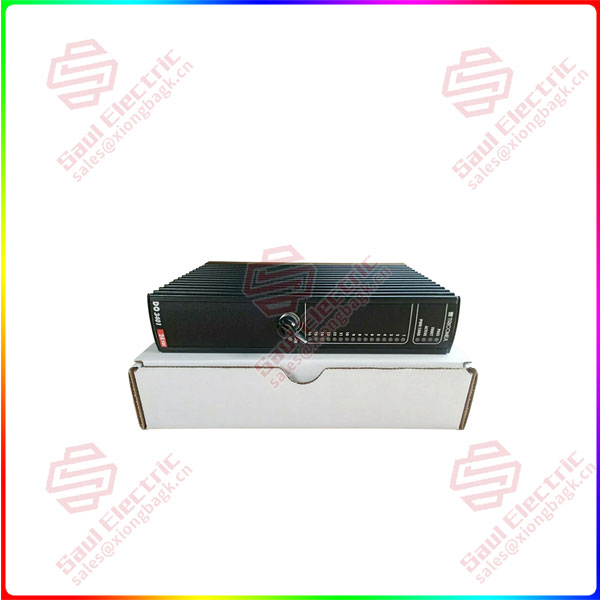
Other Communication Modules: For other protocols (e.g., 3806E for Peer-to-Peer only, 4300 Modbus Serial module, 4409 Electronic Marshalling module).
Reviews
There are no reviews yet.