Typically 2 or 4 independent pulse input channels per module.
Input Signal Type
Accepts signals from passive sensors (magnetic pickups) or active proximity switches. Configurable for various signal levels and types.
Frequency Range
Wide operating range, capable of measuring from very low frequencies (e.g., 1 Hz) up to high frequencies (e.g., 20 kHz or higher), suitable for both slow turbine run-up and high-speed operation.
Input Configuration
Configurable per channel for sourcing or sinking inputs, with software-selectable pull-up resistors and threshold levels.
Measurement Functions
Frequency Measurement: For speed/flow rate. Totalization: For accumulated flow or count. Period Measurement: For low-speed applications.
Accuracy
High measurement accuracy, typically within ±1 pulse or a small percentage of reading, essential for precise overspeed protection.
Diagnostics
Comprehensive: Sensor diagnostics (open circuit, short circuit), signal validity checks (signal loss, erratic frequency), and module self-test.
Voting Architecture
Operates in a TMR (2oo3) configuration. Outputs a voted, high-integrity frequency/count value to the Main Processor.
Isolation
Channel-to-channel and channel-to-system isolation to prevent noise interference and provide protection.
Status Indication
Per-channel LED indicators on the front panel for signal presence, fault, and voting status.
Hot Swap
Supports online insertion and removal (hot swap) in compatible Tricon chassis.
Power Supply
Powered from the Tricon chassis backplane.
Certifications
Designed for use in safety applications, supporting SIL 2/3 requirements per IEC 61508/61511.
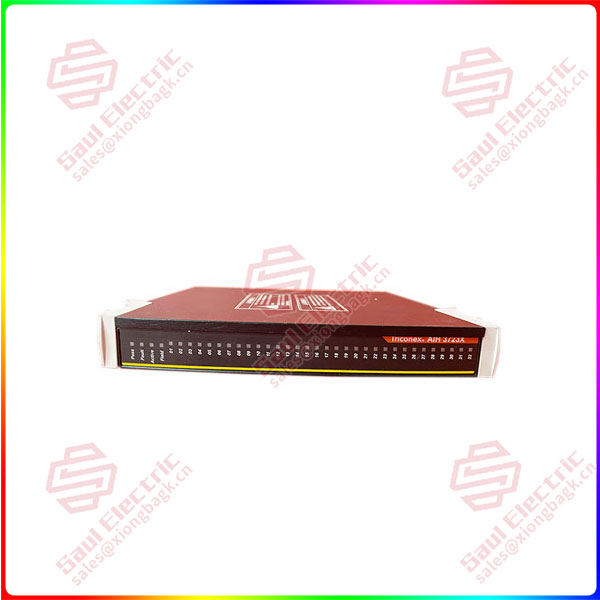
The TRICONEX 3723X is a specialized, high-performance Pulse Input Module (PIM) designed for integration within the Triconex (a Schneider Electric company) family of fault-tolerant, triple modular redundant (TMR) safety instrumented systems (SIS) and critical control systems. This module serves a unique and vital function: it is engineered to accurately measure and process high-frequency pulse signals from field devices such as turbine speed sensors (magnetic pickups or proximity probes), flow meters (turbine, vortex, or positive displacement types that generate pulses), and other equipment that outputs a frequency or pulse signal proportional to a process variable (e.g., speed, flow, rotation). The primary role of the TRICONEX 3723X is to convert these raw pulse trains into reliable, voted digital data representing speed, flow rate, or totalized count, which can then be used by the Tricon controller for critical protection functions (e.g., overspeed trip), process control, or performance monitoring.
Within the TMR architecture, three 3723X modules operate in parallel, each independently measuring the incoming pulse signal. The system employs a sophisticated 2-out-of-3 (2oo3) voting scheme on the measured values (frequency or count), providing an exceptionally high level of availability and safety integrity. This design ensures that a single module failure does not cause a nuisance trip or a dangerous failure to act. The module incorporates advanced signal conditioning to handle noisy industrial signals and extensive diagnostics to validate sensor health and signal integrity. For applications in industries like oil & gas, power generation, and turbomachinery control, the TRICONEX 3723X is the critical interface that allows the safety system to reliably monitor and protect against hazardous conditions related to overspeed or excessive flow, making it a cornerstone for SIL 2/3 certified applications.
Technical Specifications
Parameter Name
Parameter Value
Product Model
TRICONEX 3723X
Manufacturer
Triconex (Schneider Electric)
Product Type
Pulse Input Module (PIM) for Tricon TMR Systems
Number of Channels
Typically 2 or 4 independent pulse input channels per module.
Input Signal Type
Accepts signals from passive sensors (magnetic pickups) or active proximity switches. Configurable for various signal levels and types.
Frequency Range
Wide operating range, capable of measuring from very low frequencies (e.g., 1 Hz) up to high frequencies (e.g., 20 kHz or higher), suitable for both slow turbine run-up and high-speed operation.
Input Configuration
Configurable per channel for sourcing or sinking inputs, with software-selectable pull-up resistors and threshold levels.
Measurement Functions
Frequency Measurement: For speed/flow rate. Totalization: For accumulated flow or count. Period Measurement: For low-speed applications.
Accuracy
High measurement accuracy, typically within ±1 pulse or a small percentage of reading, essential for precise overspeed protection.
Diagnostics
Comprehensive: Sensor diagnostics (open circuit, short circuit), signal validity checks (signal loss, erratic frequency), and module self-test.
Voting Architecture
Operates in a TMR (2oo3) configuration. Outputs a voted, high-integrity frequency/count value to the Main Processor.
Isolation
Channel-to-channel and channel-to-system isolation to prevent noise interference and provide protection.
Status Indication
Per-channel LED indicators on the front panel for signal presence, fault, and voting status.
Hot Swap
Supports online insertion and removal (hot swap) in compatible Tricon chassis.
Power Supply
Powered from the Tricon chassis backplane.
Certifications
Designed for use in safety applications, supporting SIL 2/3 requirements per IEC 61508/61511.
Key Features and Advantages
TRICONEX 3723X is defined by its high-integrity measurement capability within a fault-tolerant architecture. Its core advantage is providing a reliable speed or flow signal in a safety-critical loop. The TMR design with voting on the measured value(not just a digital state) ensures that even in the event of a complete failure of one module, the system continues to deliver an accurate measurement based on the two healthy modules, preventing both unsafe conditions and spurious trips. This is paramount for applications like turbine overspeed protection, where a false reading could have catastrophic consequences.
TRICONEX 3721
Advanced signal conditioning and sensor diagnostics are critical for reliability. The module is designed to handle the challenging signals from industrial sensors, which can be weak, noisy, or have varying shapes. It provides configurable filtering, hysteresis, and threshold settings to ensure a clean, stable digital pulse is derived for measurement. Beyond this, it performs continuous sensor diagnostics, detecting open sensor leads, shorted cables, or loss of signal—conditions that could mask a true overspeed condition. This diagnostic intelligence is reported to the controller, enabling predictive maintenance and ensuring the safety loop’s integrity is maintained.
Flexibility and ease of integration make it suitable for diverse applications. The module can be configured for a wide range of sensors and frequency ranges through software (using TriStation 1131), eliminating the need for hardware changes. Its ability to perform both frequency measurement (for rate) and totalization (for quantity) adds to its versatility. The hot-swappable design allows for module replacement without a system shutdown, maximizing the availability of the entire safety system. For engineers, the 3723X provides a single, highly reliable solution for incorporating pulse-based measurements into a SIL-rated safety or critical control system, simplifying architecture and reducing overall lifecycle costs while meeting the most stringent safety standards.
Application Areas
The TRICONEX 3723X pulse input module is exclusively deployed in high-integrity applications where the measurement of speed or flow is part of a safety instrumented function (SIF) or critical control loop.
Its foremost application is in turbomachinery protection:
Gas Turbine & Steam Turbine Overspeed Protection Systems: It interfaces with multiple magnetic speed pickups on the turbine shaft. The voted speed signal is used by the Tricon controller to execute a safe shutdown (trip) if the speed exceeds a safe limit.
Compressor and Pump Overspeed/Underspeed Protection: For critical rotating equipment in pipelines and process plants.
In safety-critical flow monitoring and totalization:
High-integrity Flow Switches/Totalizers: For applications where excess or loss of flow requires a safety response, such as in chemical reactor feed lines or coolant systems.
Fiscal Metering and Safety: In some cases, it can be part of a system that both totals flow for custody transfer and provides a safety shutdown on high flow.
It is also used in monitoring systems for large motors, generators, and fans where speed is a critical parameter for equipment protection. Essentially, the 3723X is used wherever a pulse-generating sensor measures a variable that, if it exceeds safe limits, must trigger a highly reliable safety action in accordance with SIL 2 or SIL 3 requirements.
Related Products
TRICONEX Main Processor (MP): The TMR controller that processes the voted pulse data from the 3723X to execute safety logic.
TRICONEX Digital Output Modules (e.g., 3503E): The modules that carry out the trip command (e.g., closing fuel valves) generated by the logic based on 3723X inputs.
Speed Sensors (Magnetic Pickups, Proximity Probes): The primary sensors (e.g., from Bently Nevada, Electro-Sensors) that generate the pulse signal.
Tricon Communication Modules: For integrating the Tricon system with a DCS for monitoring and control.
TriStation 1131 Software: The engineering environment used to configure the 3723X parameters (scale factors, alarm setpoints, diagnostics) and program the application logic.
Signal Conditioners/Isolators: Sometimes used in front of the 3723X in extremely noisy environments or for intrinsic safety (IS) applications, though the module has robust built-in conditioning.
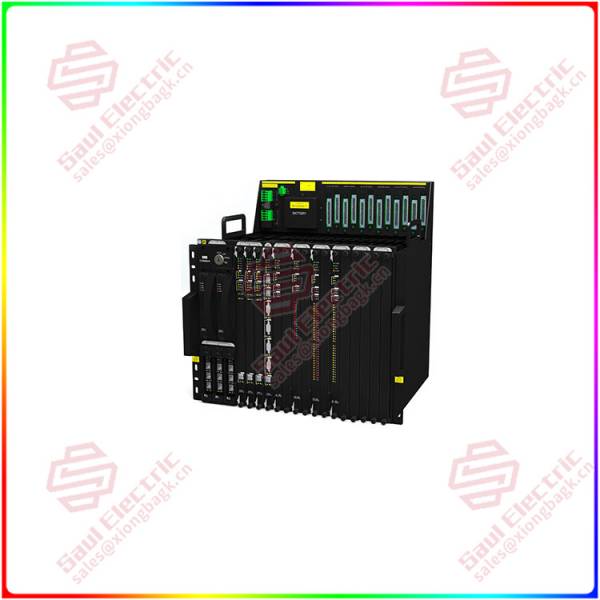
Tricon Chassis and Power Supply: The hardware infrastructure that houses the module.
Competitor Safety System Pulse Cards (e.g., HIMA, ABB): Alternative safety system components offering similar functionality.
Reviews
There are no reviews yet.
Be the first to review “TRICONEX 3723X Pulse Input Module (PIM)” Отменить ответ


Reviews
There are no reviews yet.